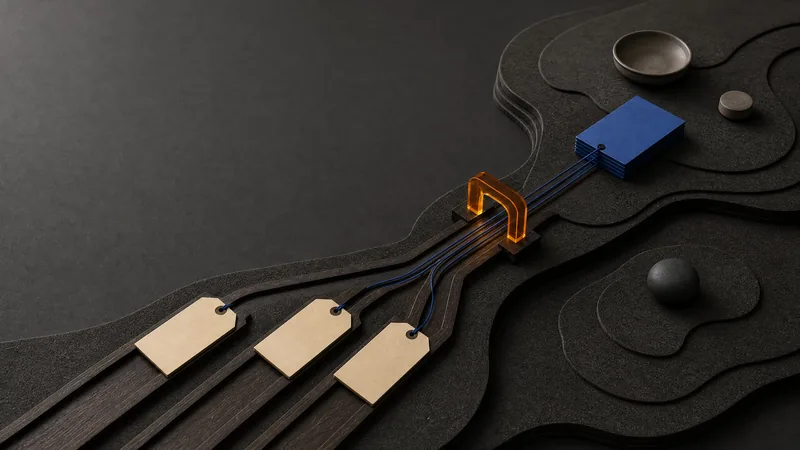
A flattering total can be wrong when the same work appears in several places.
A weekly report looks encouraging until someone notices the same project appears in a team list, a client list, and a mirrored record. The total is larger, but the work is not.
The practical check
Choose the unit that represents one real piece of work before reporting progress.
Where AI fits
AI can flag records that appear to describe the same underlying work in several places, so a person can verify whether the count is repeating one event.\n
The human decision
People decide what the metric represents and whether it supports a conclusion.
The lesson
A metric becomes useful when it counts the underlying work once, not every place it is stored.
A Build Log companion shows how to check that a weekly total counts the underlying work once.
AI Skills
Use this lesson with the AI assistant you already use
Use this to prepare a reviewable next step without changing any system.
Paste the prompt, share only the context needed to answer it, and treat the result as a draft for your review. Do not include confidential information or let an AI assistant make changes without your approval.
Optional: for a visual report and saved memory, run /dxdev first.
Don’t have it? Get it at dxdev.com/skills/dxdev. The prompt works without it.
dxdev LESSON · paste into your AI agent

LESSON: Check a metric for duplicate work

WHAT TO SHARE:
A de-identified description of the work, current evidence, and the decision you are considering.

ASK YOUR AGENT TO:
1. Separate confirmed facts from assumptions and unanswered questions.
2. Choose the unit that represents one real piece of work before reporting progress.
3. Identify the narrowest useful next review step.

RETURN:
A short table with the evidence, uncertainty, human-owned decision, and next action.

BOUNDARY: Do not change records, contact anyone, route work, publish content, or act in an external system. A person must review the evidence and approve every consequential step.