At 11:06 PM on June 29, we had a post whose core failure was a 200-line or 25KB context cap, and we still did not let it ship after one AI said SHIP.
The failure itself was ordinary enough. A long-lived agent had a memory file that was intact on disk, but its startup harness loaded only the first 200 lines or 25KB, whichever boundary it hit first. New memories were appended at the end, so the newest entries were exactly the ones the model never saw. The fix was a small always-loaded policy file, a separate lookup catalog, and a guard that exits non-zero on overflow or an orphaned entry.
The risk in writing it up was factual softening. A draft can turn “the harness loads the first 200 lines or 25KB” into “the agent kept forgetting,” and then the reader gets a model-behavior explanation for an architecture failure. That was close enough that we changed how a post reaches publish.
The sentence we would not let blur
An early draft had a strong but loose line about the memory file “lying.” It also described the agent as forgetful. Both phrases carried the feeling of the bug, and neither named the mechanism. The mechanism was plainer: the file was correct, the startup context was incomplete, and the append order put the newest entries beyond a silent boundary.
That became the test case for the review pipeline. We do not send a post to several agents and count favorable opinions. Each reviewer gets a different job, a fixed verdict, and the artifact it needs to inspect. A ship verdict does not cancel a later revision request.
The first pass went to Manus. It returned SHIP, with three concrete edits: remove the theatrical “worst class of bug” paragraph, replace the rhetoric about a broken promise, and state the portable idea as “separate state from context.”
Codex then returned REVISE. Its strongest objection was technical. “Everything past that line never reaches the model” was imprecise, because the cap had two dimensions, lines and bytes. It also pushed the post to distinguish an always-loaded policy from a lookup store, which is the architecture. And “the model was fine” was too absolute, since the failure was architectural without proving every possible model behavior was fine.
The two reviews disagreed on the verdict and agreed on several changes, which is why we want both.
Seven dimensions, seven separate scores
After the first revision, we run the body through a seven-dimension sweep. Fact and security or privacy both passed at 10. Humanization, voice, publishability, and subject passed at 8, 7, 8, and 9. Craft returned REVISE at 6.
A score does not make prose true. The sweep keeps fact checking, identity risk, readability, and craft from collapsing into one vague “looks good” decision. Here, craft found a paragraph that restated the fix after the fix had already done its work. It also found a three-sentence closing that tried to explain the idea a second time. We cut both down.
The sweep also created a real conflict. Manus and Codex wanted the generalization, “separate state from context,” while the craft reviewer wanted the whole lesson paragraph removed as redundant. We kept the generalization and removed the restating tail. The subject reviewer had scored portability at 9, and craft’s objection was to the duplicated explanation.
The final pass reads the artifact
The adversarial verifier gets the revised post and the implementation artifact. Its job is to look for drift between them, and praising the prose is not part of it.
It found three legitimate changes after the earlier passes had finished. First, it removed a dead transition before the fix section. Second, it required the guard to be concrete: a short script checks line count and byte size against the cap. Third, it rewrote one self-check instruction so a manual diff could not be mistaken for something the guard performed automatically.
Then it checked the post’s structured claims against memory_check.py. The 200-line and 25KB boundary, append plus head truncation, the two-tier design, and the non-zero exit for overflow or orphans all matched the code. That is a different review task from “does this read well?” It is closer to a test attached to an essay.
The release path is intentionally inconvenient
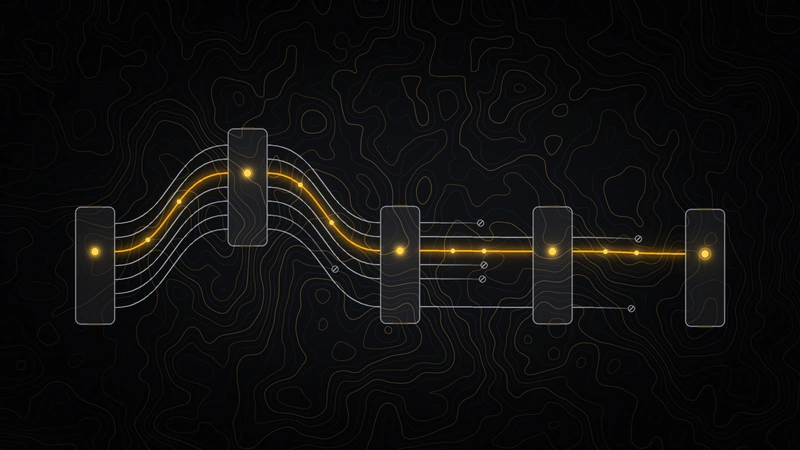
draft → Manus: SHIP or REVISE → Codex: SHIP or REVISE → revision and seven-dimension sweep → targeted synthesis of conflicts → adversarial verifier against the source artifact → publishThe shorter versions each failed on this one post. A single general review pass can polish an inaccurate framing. Voting would not have worked, because Manus shipped while Codex found precision problems and the craft dimension still required changes. One giant rubric prompt would not have worked either, because the verifier needs the real code or config beside the prose, and a longer opinion about the prose does not supply that.
The pipeline has a cost. It adds revisions, keeps a good draft from going live on the first encouraging verdict, and makes us resolve conflicts instead of pretending the agents agree. It also keeps a memory-cap article from turning into a generic story about unreliable AI.
The append order was the story, more than the 200-line and 25KB cap. A memory file that only grows forward guarantees its most recent entry is also its most likely casualty, and no number of favorable verdicts from Manus or Codex changes that arithmetic. What changed the post was the same thing that changed the harness: a second, always-loaded file that does not wait its turn at the end of a growing log.
What to check on your own agent
If an agent relies on a memory file, find out what its startup harness actually loads, because a cap of 200 lines or 25KB can drop the newest entries. Give each reviewer a distinct job, and check the published claims against the real code or config before anything ships.